In 1984, American radio airwaves experienced an unprecedented cinematic takeover as Hollywood films generated a dominant string of chart-topping pop singles.
Among this flurry of cinematic blockbusters sat The Woman in Red, an original motion picture soundtrack driven by Stevie Wonder and elevated substantially by the vocal elegance of Dionne Warwick.
While decades of nostalgia have blurred the boundary between cinema and standalone vinyl, Warwick’s integral collaboration proved how essential vocal prestige was to 1980s film storytelling.
The mid-1980s marked a distinct turning point where Hollywood studios realized that modern pop soundtracks could function as multimillion-dollar commercial engines.
Four indelible hit singles from 1984 demonstrated this sonic phenomenon while gradually decoupling from their celluloid roots in public memory.
Dan Hartman crafted “I Can Dream About You” specifically for Walter Hill’s neo-noir rock musical Streets of Fire.
Hartman produced the upbeat track after studio executives requested a contemporary number suited for a fictional Motown-style group named The Sorels.
Although singer Winston Ford performed the vocals for the film’s lip-synced sequence, Hartman retained his own vocal master for commercial radio release, sending the track straight to number six on the Billboard charts.
Meanwhile, Australian pop icon Rick Springfield attempted to capitalize on the rock-musical trend that same year with Hard to Hold.
While Springfield’s cinematic showcase did not achieve universal acclaim, it generated three Top 40 singles, including the driving power-pop anthem “Love Somebody,” which peaked at number five.
Simultaneously, John Cafferty & The Beaver Brown Band achieved unexpected radio ubiquity with “On the Dark Side”.
The Bruce Springsteen-esque rocker was originally cut for the 1983 cult drama Eddie and the Cruisers before a 1984 studio re-release pushed it to number seven.
Yet reigning supreme over this cinematic soundscape was the international juggernaut “I Just Called to Say I Love You,” composed by Stevie Wonder for Gene Wilder’s romantic comedy The Woman in Red.
Cre: Motown Records
Stevie Wonder had stepped away from standard album release schedules in the early 1980s to dedicate his energy to vital civil rights campaigns, including establishing Martin Luther King Jr. Day as a national holiday.
Five years elapsed between his landmark 1980 studio album Hotter Than July and his subsequent LP In Square Circle.
To bridge this extensive recording gap, Wonder accepted the invitation to compose and produce the official musical score for The Woman in Red.
Rather than delivering a conventional solo venture, Wonder transformed the project into a collaborative pop showcase.
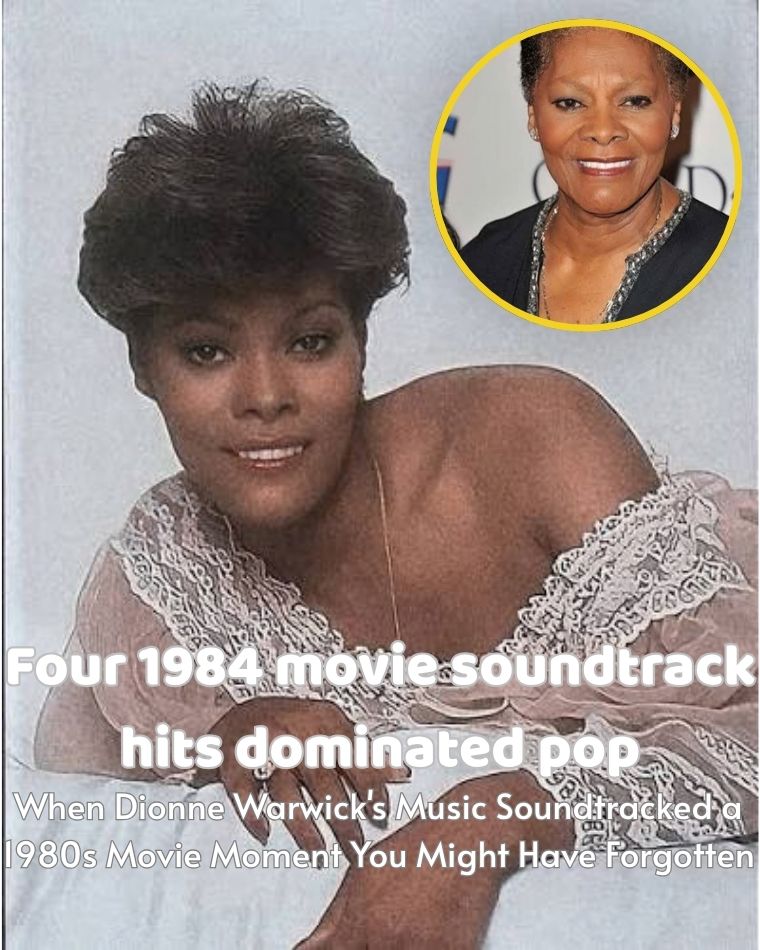
He specifically enlisted legendary vocalist Dionne Warwick to share primary billing on the soundtrack LP.
Warwick brought peerless technical phrasing honed through decades of iconic Burt Bacharach and Hal David compositions.
Her participation grounded Wonder’s bright synthesizer arrangements with timeless R&B sophistication and authentic emotional resonance.
Wonder penned three vital vocal showcases expressly featuring Warwick on the soundtrack.
Their soaring duet “It’s You” opened side one with intricate vocal interplay between Wonder’s harmonica flourishes and Warwick’s silky upper register.
Warwick took exclusive center stage on the romantic solo ballad “Moments Aren’t Moments,” delivering a nuanced masterclass in adult-contemporary phrasing.
The duo paired up once more on “Weakness,” an understated ballad exploring the intoxicating allure of romantic temptation.
To understand the emotional necessity of Warwick’s contribution, one must examine the narrative canvas of The Woman in Red.
Directed by and starring Gene Wilder, the film followed Teddy Pierce, a mild-mannered San Francisco advertising executive experiencing a sudden midlife crisis.
Teddy becomes utterly infatuated with Charlotte, a glamorous model portrayed by Kelly LeBrock, whom he spots caught in an iconic air-vent breeze while wearing a flowing red dress.
The narrative revolves around Teddy’s clumsy, neurotic, and guilt-ridden attempts to engineer an extramarital affair.
Because Wilder played the protagonist as fundamentally decent yet absurdly bewildered, the film required music that underscored genuine longing rather than cheap cynicism.
Wonder and Warwick provided that critical narrative counterbalance.
Whenever Teddy found himself immobilized by romantic escapism, Warwick’s reflective timbre provided emotional maturity.
Her vocals on “It’s You” and “Moments Aren’t Moments” elevated what could have felt like an ordinary sex farce into a thoughtful meditation on romantic illusion.
Warwick’s expressive restraint offered viewers a window into genuine vulnerability, making Teddy’s internal confusion sympathetic.
Upon its commercial arrival on August 28, 1984, The Woman in Red soundtrack achieved worldwide commercial resonance.
The album soared to number four on the US Billboard 200 and dominated the Billboard Top R&B/Hip-Hop Albums chart at number one.
Globally, the LP climbed to number two in the United Kingdom, yielding certified platinum sales on both sides of the Atlantic.
The lead single, “I Just Called to Say I Love You,” became a runaway pop cultural phenomenon.
The track topped music charts in over twenty countries, eventually earning Stevie Wonder the Academy Award and the Golden Globe for Best Original Song.
Music critics acknowledged that while the synthesized textures reflected 1984’s electronic production trends, Warwick’s presence grounded the release in pure soul craftsmanship.
Reviewers singled out her performance on “Moments Aren’t Moments” as an exquisite showcase of adult contemporary musicianship.
Her harmonious interplay on “It’s You” laid the creative foundation for her and Wonder’s historic 1985 charity collaboration, “That’s What Friends Are For”.
The soundtrack demonstrated that Dionne Warwick could seamlessly adapt her classic 1960s pop sensibilities to modern 1980s studio production without sacrificing her core artistic identity.
Despite breaking commercial records in 1984, the explicit film connection of these monumental songs gradually evaporated from general pop culture consciousness.
Contemporary listeners frequently assume “I Just Called to Say I Love You” was an unattached single from an essential Stevie Wonder studio LP.
Likewise, younger generations celebrating Dionne Warwick’s discography regularly treat “Moments Aren’t Moments” and “It’s You” as standalone studio cuts rather than cinematic cues.
Several industry dynamics explain this peculiar cultural disconnect.
First, standard radio syndication and MTV heavy rotation naturally divorced audio tracks from narrative context.
DJs broadcasted tracks like “I Can Dream About You,” “Love Somebody,” and “On the Dark Side” alongside mainstream Top 40 hits without citing their cinematic origins.
Second, many 1984 feature films enjoyed brief theatrical lifespans compared to the enduring longevity of their platinum singles.
Movies like Streets of Fire and Hard to Hold became historical footnotes, yet the pop tracks contained within them retained permanent spots on recurrent radio rotations.
In the case of The Woman in Red, Kelly LeBrock’s striking red dress became an enduring visual meme, but the film’s full plot faded behind Wonder’s ubiquitous melodies.
Warwick’s contributions outlived the comedy’s theatrical run because her vocals conveyed universal, transcendent themes of romance and yearning.
The crossover triumphs of 1984 permanently altered how major film studios and record labels forged strategic partnerships.
Hollywood producers realized that a strategically curated soundtrack album could serve as an autonomous advertising vehicle weeks before a film opened in theaters.
Pop artists realized that contributing an exclusive original song to a feature film granted them immediate access to mainstream cinematic marketing.
Dionne Warwick’s seamless integration into The Woman in Red proved that soundtrack albums could flourish when built upon elite, versatile vocalists rather than disposable incidental music.
Her work alongside Stevie Wonder established a high standard for vocal duets in major motion pictures throughout the late 1980s and 1990s.
Soundtracks transformed from utilitarian audio souvenirs into prestige showcases where historic musicians gathered to experiment across stylistic boundaries.
When we re-examine 1984, the year emerges as a golden threshold where film scoring embraced unadulterated pop ambition.
Dionne Warwick’s sophisticated vocal touch remains a sparkling testament to an era when movie music dominated the global cultural dialogue.
Để lại một phản hồi