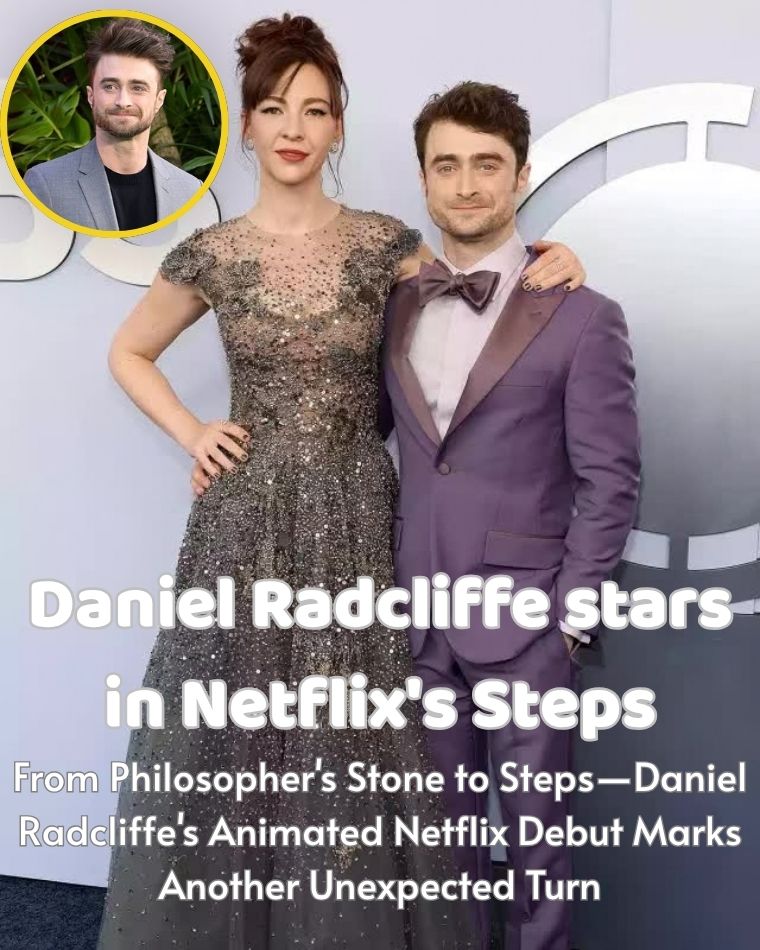
Daniel Radcliffe and Amanda Seyfried are officially teaming up for Netflix’s upcoming animated feature Steps, a delightfully twisted subversion of the traditional Cinderella fairy tale arriving on November 20. The newly launched trailer highlights Radcliffe’s latest venture into uncharted creative territory, pairing his bold comedic sensibilities with Seyfried’s celebrated vocal talents.Directed by Alyce Tzue and John Ripa, the animated comedy flips long-standing folklore conventions on their heads to deliver an irreverent, sharp-edged story.
The announcement of Steps reinforces Radcliffe’s ongoing dedication to surprising audiences across an expansive range of cinematic mediums.
The film represents an intriguing pivot into feature-length animation for an actor whose post-Potter choices have rarely followed conventional career paths.
Netflix has set November 20 as the global streaming premiere date, positioning Steps as a centerpiece of its late-autumn animated lineup.
The release of the trailer offers the public its first clear look at the visual and tonal audacity that defines this fairy tale reinvention.
Rather than rehashing familiar romantic folklore, the narrative approaches Cinderella’s world from a distinctly cynical and comedic vantage point.
The newly released footage confirms that classic archetypes will be deconstructed with sharp wit and satirical energy.
Radcliffe’s involvement brings undeniable pedigree to a voice ensemble tailored to subvert nostalgic storytelling tropes.
Fans of unconventional fairy tale satire are already taking notice of the project’s razor-sharp banter and subversive themes.
The film serves as another prime example of streaming giants offering creators room to interrogate beloved legacy narratives.
Audiences who grew up on sanitized fairy tales are increasingly seeking stories that acknowledge the absurdity of old-world court dynamics.
Cre: Wikimedia Commons — CC BY-SA 2.0
For Radcliffe, the transition to animated voice acting marks an exciting departure from his most visible screen habits.
His post-Hogwarts career has been defined by extreme physical commitment and demanding on-camera transformations.
From portraying a flatulent corpse in Swiss Army Man to strapping pistols to his hands in Guns Akimbo, Radcliffe has regularly embraced visceral physical challenges.
His critically acclaimed turn in Weird: The Al Yankovic Story relied heavily on frantic theatricality, expressive physicality, and muscular posture.
By stepping into the recording booth for an animated feature, Radcliffe must strip away those visual instruments entirely.
Voice performance forces an actor to communicate pathos, irony, and charm using only acoustic inflection and vocal timing.
Without the safety net of an expressive face or body language, every subtle intention must reside inside the spoken word.
Animation leaves no room for ambiguous physical gestures to bridge the gap between performer and audience.
Every line read must carry sufficient punch to match the stylized character movement crafted by the animators.
Radcliffe has tackled voice work on rare occasions, but leading a major animated feature represents a brand new challenge.
His vocal agility and natural deadpan timing will have to shoulder the narrative weight of his animated alter ego.
Industry observers will be watching closely to see how his distinct comedic sensibility translates through an illustrated surrogate.
The project allows Radcliffe to test his timing within a highly collaborative medium that builds performances frame by frame.
His participation demonstrates that he views vocal performance as an art form worthy of the same deliberate preparation as live theater.
Radcliffe’s comedic partnership with Amanda Seyfried forms one of the central attractions of Steps.
Seyfried has constructed an eclectic filmography that deliberately resists convenient Hollywood typecasting.
Her work stretches effortlessly from musicals like Mamma Mia! and Les Misérables to prestige character studies such as Mank.
Seyfried’s Emmy-winning performance in The Dropout showcased her ability to balance grotesque social satire with piercing psychological realism.
Teaming up with Radcliffe ensures that the film possesses a dynamic comic counterweight between its two marquee leads.
Both actors share a proven willingness to embrace eccentric material that risks looking absurd on paper.
Their shared presence signals that Steps is aiming for genuine narrative bite rather than generic family entertainment.
Seyfried brings exceptional musicality and tonal control to her vocal delivery, complementing Radcliffe’s kinetic verbal cadence.
The comedic friction between their characters forms the core engine of the film’s satirical ambitions.
The pairing reflects deliberate casting by directors Alyce Tzue and John Ripa, who wanted seasoned performers adept at deadpan humor.
Seyfried’s background in high-profile animated work gives her seasoned familiarity with the discipline of the recording booth.
Her collaborative interplay with Radcliffe grounds the fantastical setting in authentic interpersonal tension.
The chemistry evident in the early promotional footage shows two artists thoroughly enjoying the opportunity to mock genre clichés.
Their mutual dedication to subverting audience expectations elevates the stakes of what might otherwise have been a standard parody.
The trailer showcased by Cartoon Brew makes it clear that Steps has no interest in flattering traditional fairy tale morals.
The traditional Cinderella narrative revolves around pure virtue, passive endurance, and sudden royal salvation.
In contrast, Steps injects a caustic, contemporary perspective into the palace ballroom and its supporting players.
The kingdom depicted in the footage is neither utopian nor particularly dignified.
Its aristocracy is self-absorbed, the royal matchmaking rituals are absurdly transactional, and the romantic ideals are blatantly manufactured.
The humor hinges on puncturing romantic melodrama with sharp, modern observation.
Characters constantly vocalize anxieties that traditional fairy tales systematically suppress.
The slipper on the staircase is treated less as destiny and more as an arbitrary piece of social theater.
By questioning whose version of events has historically been canonized, the film joins a rich tradition of fairy tale revisionism.
Audiences familiar with films like Shrek will immediately recognize the irreverent spirit guiding the screenplay.
Yet Steps adopts a sleeker, more character-driven aesthetic tailored to the sensibilities of modern animation audiences.
The color palette and character designs lean into exaggerated comic expressions rather than rigid storybook elegance.
The writing shown in the teaser relies on fast-paced verbal sparring rather than slapstick physical comedy alone.
The subversive approach forces viewers to reconsider which characters actually deserve sympathy in the classic dispute.
Every sequence teased in the promotional roll out works systematically to dismantle the romantic illusions of royal courtship.
Radcliffe’s decision to star in an animated comedy fits cleanly into his overarching philosophy of genre exploration.
Ever since completing the Harry Potter franchise, Radcliffe has systematically resisted building a singular, commodified star persona.
He has avoided the traditional Hollywood pathway of jumping between big-budget superhero franchises and predictable action thrillers.
Instead, Radcliffe has treated his career as a playground to sample cinema across its full stylistic spectrum.
He ventured into chilling period horror with The Woman in Black, grounding the film in quiet grief and dread.
He explored intense claustrophobia and raw physical torment in Jungle, based on real-life wilderness survival.
He tackled romantic comedy in What If, delivering witty, understated naturalism alongside Zoe Kazan.
He jumped headfirst into off-kilter crime capers like Now You See Me 2, bringing neurotic energy to an eccentric villain.
He accepted deeply strange, provocative scripts like Horns, where a young man wakes up sprouting demonic appendages.
On Broadway and the West End, he has consistently tackled complex stage dramas and musicals, earning critical acclaim and theatrical awards.
Each move seems designed to challenge his own comfort zone rather than consolidate a safe commercial brand.
Animation was one of the few storytelling domains in which Radcliffe had not yet mounted a major, high-profile project.
His arrival in the medium through Steps feels organic rather than opportunistic.
It represents an artist pursuing another distinct toolset to see how his craft functions under altered constraints.
By picking an animated project with a satirical backbone, Radcliffe continues to signal that story originality outweighs guaranteed commercial comfort.
The art of voice acting presents unique hurdles that differentiate it fundamentally from camera acting.
On a movie set, an actor communicates constantly with their eyes, micro-expressions, posture, and spatial relationships.
A simple tilt of the chin or a heavy sigh can communicate profound narrative meaning without the need for dialogue.
In the recording booth, however, those unspoken cues are entirely unavailable to the audience unless the animator manually translates them.
Radcliffe has to funnel his entire interpretation into the timbre, rhythm, and volume of his speaking voice.
Actors frequently describe voice recording as an unexpectedly exhausting mental and physical exercise.
Performing high-energy comedic sequences while standing stationary behind a microphone requires unusual stamina and hyper-awareness.
Actors must often deliver lines without their scene partners physically present in the room to bounce energy against.
Building comedic timing in isolation requires extraordinary trust in the director’s guidance and instincts.
Every line read requires numerous variations in inflection, allowing animators and editors to construct the precise comic rhythm later.
The performance is assembled in fragments over the course of months or even years.
For someone like Radcliffe, who thrives on theatrical immediacy, the delayed gratification of animation demands immense discipline.
The final result is not purely an actor’s performance, but an intimate hybrid between the voice artist and the animating team.
When executed with precision, that fusion produces characters that feel alive and unforgettable in ways live action cannot replicate.
Steps gives Radcliffe a rare chance to see his imaginative choices amplified and transformed through the lens of visionary animators.
The upcoming release will allow audiences to judge how successfully he conquers this demanding artistic medium.
When Steps lands on Netflix on November 20, it will add another fascinating chapter to Daniel Radcliffe’s remarkably unpredictable trajectory.
His ongoing willingness to dismantle expectations continues to make him one of the most adventurous working actors of his generation.
Whether deconstructing pop royalty or reimagining vintage fairy tales, Radcliffe demonstrates that artistic curiosity remains his primary compass.
Để lại một phản hồi