Between 1999 and 2001, global cinema experienced a distinct cultural zeitgeist driven by a single leading man who managed to occupy opposite ends of the cool spectrum simultaneously.
Brad Pitt’s extraordinary transformation from mainstream heartthrob to defining cultural icon crystallized precisely through two career-defining roles that arrived in rapid succession at the turn of the millennium.
As the anarchic philosopher Tyler Durden in David Fincher’s landmark 1999 feature Fight Club, Pitt embodied a dangerous, anti-establishment brand of masculine cool that permanently altered popular culture.
Just two years later, his effortless turn as master thief Rusty Ryan in Steven Soderbergh’s star-studded 2001 caper Ocean’s Eleven showcased a completely different archetype of cool defined by smooth competence and breezy charm.
Together, these two iconic performances demonstrated a staggering range while cementing Pitt as the undisputed cinematic icon of the late 90s and early 2000s.
The Tyler Durden Archetype: Dangerous, Philosophical, and Countercultural Cool
The turn of the millennium was marked by widespread millennial anxiety and disillusionment with late-stage consumer capitalism.
Into this cultural vacuum stepped Tyler Durden, a cinematic creation that subverted every traditional expectation of the Hollywood leading man.
As portrayed by Pitt in Fight Club, based on Chuck Palahniuk’s novel and directed by David Fincher, Durden was an anarchic agent of chaos living on society’s fringes.
His chiseled physique, red leather jacket, and spiked hair immediately captured the public imagination and sparked global stylistic imitation.
Yet, beyond his striking visual aesthetic, Durden offered a scathing philosophical critique of modern corporate existence and material accumulation.
He argued that modern men had been raised by television to believe they would eventually become millionaires, movie gods, and rock stars, only to slowly realize the harsh reality of their mundane routines.
This existential nihilism resonated deeply with audiences looking for an outlet against the suffocating conformity of white-collar office culture.
Pitt infused the character with a volatile mixture of hypnotic charisma, physical intensity, and unsettling philosophical conviction.
Every line delivered by Durden felt like a manifesto designed to tear down the pillars of contemporary middle-class complacency.
The resulting archetype established a template for countercultural cool that rejected mainstream validation in favor of raw, unfiltered authenticity.
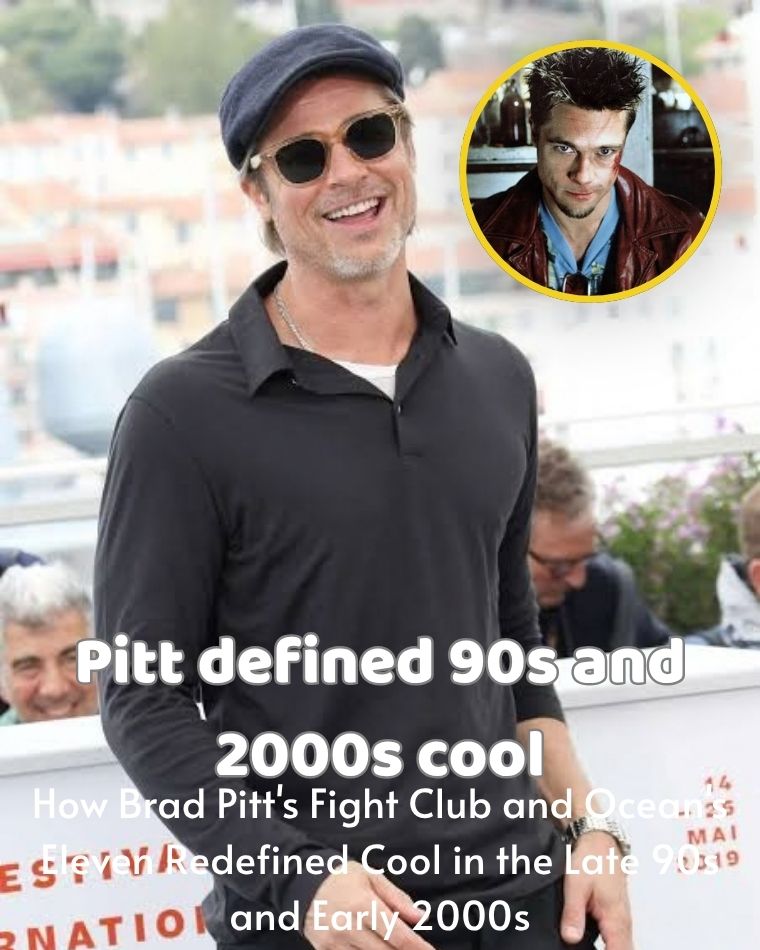
Cre: Gage Skidmore — Wikimedia Commons (CC BY-SA 2.0)
From Initial Polarization to Monumental Cult Status
When Fight Club premiered in 1999, its reception was notably divisive among mainstream critics and conservative moviegoers.
Many traditional reviewers struggled to reconcile the film’s brutal depiction of underground bare-knuckle fighting with its deeper satirical commentary on consumer society.
Box office returns during its initial theatrical run were modest, leaving studio executives momentarily uncertain about the film’s lasting cultural footprint.
However, the arrival of home video and digital streaming formats triggered a massive critical re-evaluation that transformed the movie into an undisputed cultural touchstone.
Audiences began to appreciate David Fincher’s meticulous direction, dark humor, and the brilliant psychological framing of the narrative.
Pitt’s performance was singled out as a masterclass in magnetic screen presence, balancing surreal menace with undeniable magnetism.
The film’s exploration of alienation, consumerism, and psychological fragmentation felt increasingly prescient as the digital age accelerated in the following decades.
What was once viewed by some contemporary critics as overly provocative eventually earned universal recognition as a defining cinematic achievement of the twentieth century.
The Rusty Ryan Contrast: Effortless, Smooth, and Charming Competence
Just two years after subverting cinematic expectations with Fight Club, Brad Pitt executed a brilliant pivot toward accessible, high-wattage charm.
In Steven Soderbergh’s 2001 ensemble masterpiece Ocean’s Eleven, Pitt stepped into the impeccably tailored suits of Rusty Ryan.
Unlike the volatile and destructive energy of Tyler Durden, Rusty represented a cool that was entirely frictionless, consumable, and endlessly appealing.
As the right-hand man to George Clooney’s Danny Ocean, Rusty moved through high-stakes heists with an air of complete and absolute mastery.
Director Soderbergh famously utilized a running visual motif throughout the film that became an instant pop culture signature for the character.
Rusty was perpetually eating, holding a cocktail, or casually inspecting a situation while maintaining total control over every variable in the room.
This constant snacking and relaxed posture made high-stakes criminal espionage look like an effortless walk in the park.
Pitt proved that an actor could project supreme confidence without ever needing to raise his voice or resort to overt aggression.
The character’s effortless competence offered a comforting counterweight to the intense psychological turmoil of his previous iconic role.
Ensemble Chemistry and Commercial Triumph
Ocean’s Eleven arrived in theaters in November 2001, providing American and international audiences with a much-needed dose of sophisticated cinematic escapism.
The film’s massive commercial success relied heavily on the palpable, effortless chemistry shared among its star-studded ensemble cast.
George Clooney, Matt Damon, Julia Roberts, and Brad Pitt played off one another with a relaxed camaraderie reminiscent of classic rat-pack cinema.
Soderbergh’s breezy, jazz-infused direction allowed every performer to shine without feeling the need to over-dramatize the narrative stakes.
Pitt served as the stylish anchor of the group, balancing Clooney’s smooth ringleader persona with youthful swagger and dry comedic timing.
The banter between the actors felt completely organic, giving viewers the impression that they were watching real friends pull off an impossible caper.
This collaborative dynamic elevated a standard studio remake into a genre-defining standard for modern ensemble filmmaking.
The film’s box office triumph proved that sophisticated adult entertainment could dominate global markets when driven by genuine star power.
Showcasing Extraordinary Leading Man Range
The back-to-back delivery of Fight Club and Ocean’s Eleven remains one of the most impressive displays of acting range in modern Hollywood history.
Within a span of twenty-four months, Pitt transitioned seamlessly from a psychotic manifestation of anti-social rage to a suave, reliable mastermind of cool.
Many popular actors struggle to escape the gravitational pull of a single defining persona once they achieve global superstardom.
Pitt actively subverted typecasting by embracing wildly divergent cinematic tones, visual aesthetics, and character motivations.
David Fincher’s dark, gritty, expressionistic world demanded an intense, uninhibited physicality and psychological vulnerability.
Conversely, Steven Soderbergh’s sleek, neon-lit Las Vegas required precise comedic timing, physical economy, and effortless charm.
By conquering both extremes, Pitt proved that he was not merely a passive movie star relying on physical attractiveness.
He emerged as a versatile character actor trapped inside a leading man’s body, capable of shaping the cultural zeitgeist from multiple angles simultaneously.
This strategic versatility extended his career longevity far beyond the typical expiration date of late-90s heartthrobs.
The Lasting Cultural Influence on Style and Masculinity
The cultural shockwaves generated by Tyler Durden and Rusty Ryan continue to reverberate across contemporary fashion, design, and masculine identity.
Durden’s wardrobe—featuring distressed sunglasses, bold patterned shirts, and unapologetic physical confidence—permanently altered underground street fashion.
The philosophical detachment popularized by the character influenced an entire generation of young men questioning the merits of corporate ladder-climbing.
On the opposite end of the spectrum, Rusty Ryan established a masterclass in modern menswear tailoring and effortless accessorizing.
The slim-fit suits, vintage leather jackets, and relaxed confidence seen in Ocean’s Eleven redefined modern red-carpet and everyday style.
Both characters proved that cinematic cool is not a monolithic concept, but a spectrum ranging from dangerous disruption to effortless grace.
Directors and screenwriters continue to reference these archetypes whenever they need to construct a truly magnetic anti-hero or charming rogue.
Pitt’s ability to embody these contrasting ideals within two short years ensured his permanent placement in the pantheon of Hollywood legends.
The legacy of these performances remains a high-water mark for how popular cinema can simultaneously entertain and shape cultural reality.
The Turning Point That Defined a Legacy
Looking back at the transition from 1999 to 2001 reveals a crucial inflection point in Brad Pitt’s professional trajectory.
Before Fight Club, he was frequently evaluated through the narrow lens of romantic leads and dramatic heartthrob expectations.
By diving headfirst into David Fincher’s dark satire and subsequently embracing Soderbergh’s smooth heist comedy, he shattered those limitations forever.
He established a blueprint for how a major global star could maintain commercial viability while taking daring artistic risks.
The twin pillars of Tyler Durden and Rusty Ryan stand as monumental achievements in late-century filmmaking.
They captured the shifting anxieties and desires of a changing world on the brink of a new digital millennium.
Audiences looking back at this era continue to marvel at how one actor could define two completely different versions of cinematic perfection.
Pitt’s career-defining run proved that true icon status is earned not by playing it safe, but by embracing the glorious extremes of human character.
The cinematic landscape of the twenty-first century has yet to produce another actor who could dominate the cultural conversation with such effortless dual mastery.
Để lại một phản hồi