In 1962, a young gospel-trained background vocalist walked into a recording studio with Burt Bacharach and Hal David to sing demo tracks. What began as routine commercial session work quickly turned into a groundbreaking collaboration that redefined the architectural possibilities of American popular music. The resulting single, “Don’t Make Me Over,” did far more than launch Dionne Warwick’s solo career—it established a sophisticated sonic blueprint that would dominate the airwaves for the next decade.
A Fateful Encounter in the Heart of the Brill Building Era
The early 1960s was an era when New York City served as the bustling nerve center of American commercial pop songwriting.
Young composers and lyricists worked around the clock in tight office cubicles to craft material for established stars.
Burt Bacharach was already establishing himself as an arranger with an unusually sophisticated ear for unexpected harmonies and asymmetrical rhythms.
Hal David possessed a distinctive gift for penning conversational, emotionally nuanced lyrics that felt intimately authentic rather than theatrical.
Together, the songwriting duo constantly sought capable studio vocalists who could capture their complex ideas on working acetate demos.
At the time, Dionne Warwick was a dedicated music student balancing rigorous classes at the Hartt College of Music in Connecticut with weekend studio sessions in Manhattan.
She had been performing since childhood within the gospel tradition alongside her family group, the Gospelaires.
This rich foundation gave her an instinctive command of pitch, breath control, rhythmic flexibility, and deep dynamic phrasing.
During a 1961 recording session for The Drifters’ song “Mexican Divorce,” Bacharach looked across the studio glass and immediately noticed her unmistakable precision.
Her ability to effortlessly navigate challenging vocal intervals caught the composer’s immediate attention.
Bacharach quickly asked Warwick if she would be open to singing guide vocals on their publishing demos.
Warwick accepted the proposition, viewing it as valuable paid professional experience to support her ongoing college education.
Little did anyone in the room realize that these modest demo assignments would alter the history of modern songwriting.
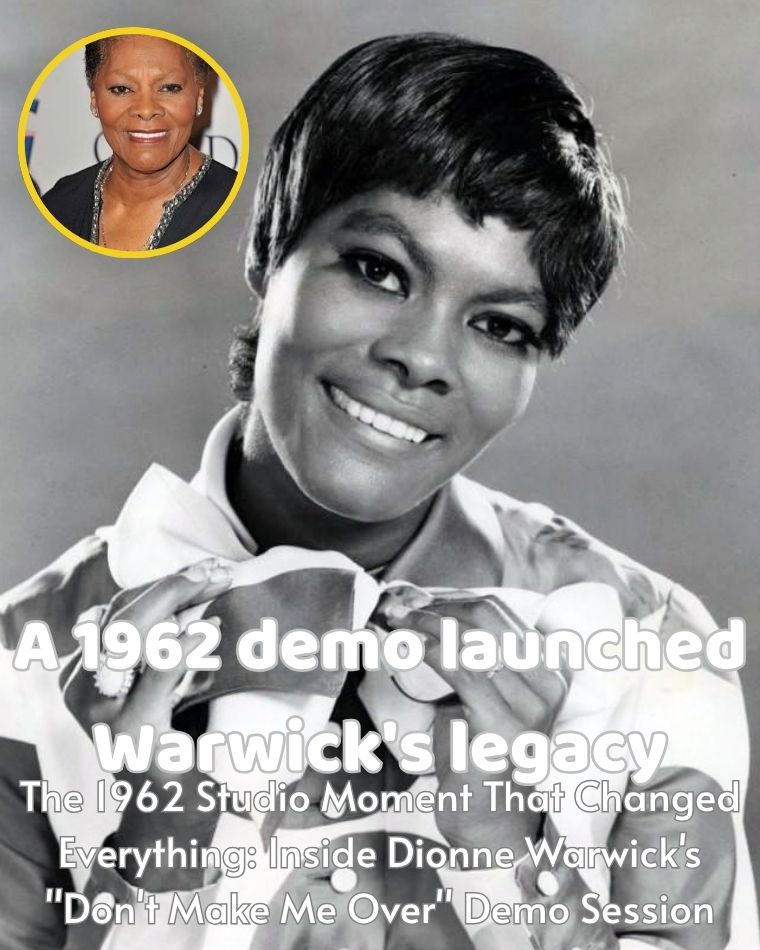
Cre: CBS Television / Wikimedia Commons — Public Domain (PD-pre1978)
The Frustration That Sparked a Classic Title
The professional chemistry among the trio flourished rapidly, yet it was not without emotional friction.
Warwick had recorded a breathtaking guide demo for a new Bacharach-David composition titled “Make It Easy on Yourself”.
She believed the writers intended that sweeping ballad to serve as her formal introduction to the music world as a solo artist.
However, the recording industry of 1962 operated on cautious commercial instincts, often favoring established names over unknown talent.
The songwriting team placed the song with seasoned soul crooner Jerry Butler, whose rendition promptly shot up the national charts.
Warwick discovered the news while listening to the car radio and was immediately overcome with heartbreak and betrayal.
She marched directly into the office where Bacharach and David were working to confront them about the broken promise.
Furious that her artistic efforts had been handed away to someone else, she stood her ground.
In the heat of that argument, she declared firmly: “Don’t make me over, man!”
In the vernacular of the time, the phrase was an unvarnished demand for respect and authenticity.
She was telling the two men never to mislead her, attempt to alter who she was, or compromise her integrity.
She turned on her heel and stormed out of the studio, leaving both writers stunned into silence.
Rather than reacting defensively, Hal David recognized the emotional weight and poetic resonance in those five defiant words.
He sat down at his typewriter and began exploring what it meant to plead for unconditional acceptance in a relationship.
Bacharach sat down at the piano, constructing an intricate, shifting harmonic progression to match the lyrical vulnerability.
When Warwick returned to the studio roughly a week later, the anger had cooled, but her artistic resolve remained unshaken.
The two composers smiled and handed her a freshly written manuscript titled “Don’t Make Me Over”.
They had transformed her genuine outrage into a tailored piece of art created specifically for her vocal range.
Inside Bell Sound Studios: The Anatomy of a Masterpiece
In August 1962, Warwick entered Bell Sound Studios in New York City to put the song on tape.
The room was filled with seasoned session players, string players, and percussionists ready to tackle Bacharach’s elaborate charts.
Bacharach was notorious for demanding surgical perfection from every musician under his baton.
His compositions were famous for shifting time signatures, sudden syncopations, and delicate orchestrations that pushed pop boundaries.
Many experienced pop vocalists struggled to maintain pitch and emotional flow through these sudden structural hurdles.
Warwick, however, treated Bacharach’s dense musical arrangements with extraordinary ease.
Her formal conservatory ear allowed her to dissect complex modulations instantly.
Simultaneously, her church background infused every line with deep human conviction and effortless emotional dynamics.
During the recording session, Bacharach worked tirelessly to capture the exact tension the track required.
He put Warwick through an exhausting marathon of thirty-two takes to achieve the flawless balance of precision and raw emotion.
Yet when it came time to select the master recording, Bacharach chose Take 2.
That early take retained the spontaneous spark and quiet dignity of Warwick’s natural delivery before studio fatigue set in.
The opening of the track showcased an understated intimacy that was unheard of in the brassy pop arrangements of 1962.
Instead of belting from the first measure, Warwick delivered the verses with hushed restraint.
As the orchestration swelled with timpani, strings, and backing vocals, her voice rose with soaring power without ever losing control.
She made the intricate rhythmic shifts sound completely intuitive to the listener.
A Typo on the Label and a Surprise Radio Revolution
Once the master was delivered, Florence Greenberg, the astute founder of Scepter Records, prepared the vinyl for distribution.
Greenberg originally viewed another song, “I Smiled Yesterday,” as the primary track and relegated “Don’t Make Me Over” to the B-side.
When the first pressing of the 45-rpm vinyl arrived from the factory, an accidental typographical error appeared on the label.
The singer’s legal surname, Marie Dionne Warrick, was mistakenly spelled as “Dionne Warwick”.
Rather than delaying the commercial release to reprint thousands of sleeves, Warwick decided to adopt the misspelled name permanently.
It proved to be a fateful branding moment for one of the greatest names in pop history.
The single was officially shipped out to radio stations in late autumn of 1962.
Radio disc jockeys around the country immediately recognized something extraordinary on the flip side.
They flipped the single over and began playing “Don’t Make Me Over” repeatedly across major markets.
Listeners inundated stations with telephone requests asking to hear the record again.
The song climbed steadily onto the national charts, entering the Top 20 on the Billboard Hot 100 and peaking at number four on the Cash Box R&B survey.
Scepter Records quickly mobilized, recognizing that they had captured lightning in a bottle.
Florence Greenberg greenlit an entire debut LP, titled Presenting Dionne Warwick, which hit record shelves in 1963.
Warwick had graduated from an anonymous session singer into an undeniable national recording artist.
The Blueprint for a Golden Age of Songwriting
The triumph of “Don’t Make Me Over” established an unshakeable creative triangle among Warwick, Bacharach, and David.
Prior to this session, Bacharach and David had scattered their material across dozens of independent vocalists.
Following this breakthrough, they realized they had found their ultimate muse and musical collaborator.
Warwick was not merely a singer executing sheet music; she was an essential partner in the creative architecture.
Bacharach began tailoring his complex chord progressions and unconventional meters specifically around her expansive vocal range.
If a note felt awkward against Hal David’s conversational lyrics, Warwick had full artistic freedom to reshape the phrasing in the room.
David tailored his poetry to her understated, dignified delivery, avoiding melodramatic cliches.
This collaborative method yielded an astonishing catalog of timeless classics over the next decade.
Evergreen masterpieces like “Anyone Who Had a Heart,” “Walk On By,” “I Say a Little Prayer,” and “Do You Know the Way to San Jose” followed this identical sonic formula.
Each song pushed the harmonic boundaries of mainstream pop music into territories previously reserved for modern jazz and classical chamber pieces.
Yet because Warwick grounded those complex progressions in pure soul and emotional vulnerability, millions of mainstream listeners embraced them unconditionally.
Their work dismantled outdated boundaries that separated black rhythm and blues from white adult contemporary pop.
Warwick’s cool sophistication and impeccable phrasing crossed commercial formats effortlessly during an era of rigid radio segregation.
She became a global ambassador of refined American soul, earning standing ovations in European concert halls and legendary television specials.
The Enduring Cultural Impact of a Defiant Anthem
More than six decades after that fateful 1962 session, “Don’t Make Me Over” retains its timeless emotional resonance.
The song set a standard for female empowerment in popular music long before the concept became an industry buzzword.
Instead of presenting a singer passively adapting to please an unfaithful partner, the lyrics demanded total acceptance.
Subsequent generations of vocalists have turned to the track as an enduring benchmark of vocal control and emotional authenticity.
Cover versions by artists across soul, rock, and contemporary R&B have repeatedly introduced the song to new audiences.
In 1989, singer Sybil revitalized the track with a contemporary urban groove that once again surged up the international pop charts.
Yet music critics and historians universally agree that Warwick’s original 1962 performance remains untouchable.
The track stands as a testament to what happens when raw talent, compositional brilliance, and fearless self-advocacy collide in a studio.
Warwick’s willingness to speak her truth to Bacharach and David created the very catalyst that defined their collective genius.
That single afternoon in Bell Sound Studios proved that true artistry begins when an artist refuses to be molded into someone else’s image.
Để lại một phản hồi